


Introduction
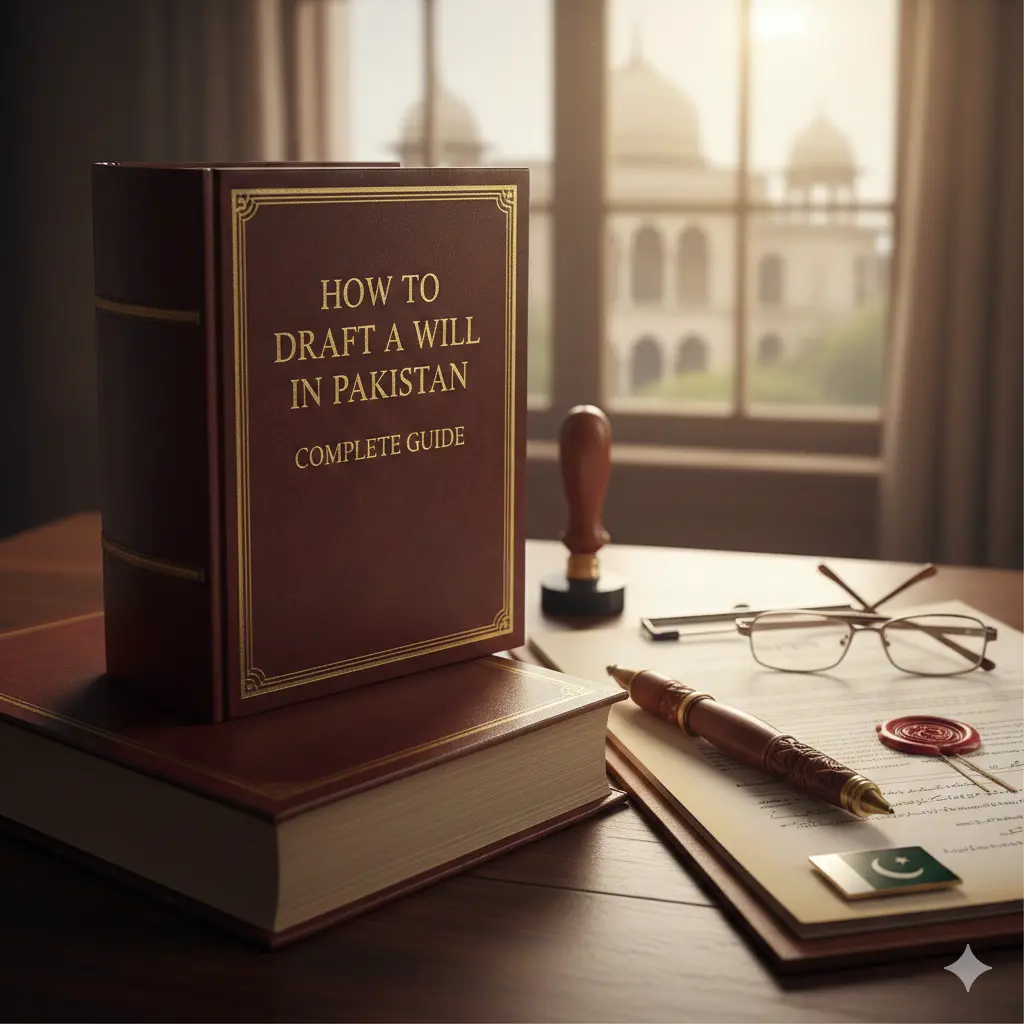
How to draft a will in Pakistan is an important question for anyone who wants to ensure their assets are distributed according to their wishes after death. A properly written will prevents family disputes, protects minor children, and ensures smooth estate distribution under Pakistani law.
What Is a Will and Why Do You Need One?
Definition of a Will
A will is a legal document that specifies how a person’s property, assets, and other belongings will be distributed after their death. It can also include instructions for the care of dependents, such as children, and can appoint guardians or executors to carry out the provisions of the will.
Importance of Drafting a Will:
Ensures the Distribution of Assets as per Your Wishes: A will ensures that your assets go to the people you want them to after your death.
Prevents Family Disputes: A clear will can help prevent misunderstandings or conflicts among family members about how your assets should be divided.
Appoints Guardians for Minor Children: If you have children under the age of 18, a will allows you to appoint a guardian to care for them.
Step-by-Step Guide to Drafting a Will in Pakistan
Step 1: Determine Your Assets and Beneficiaries
The first step in drafting a will is to make a list of all your assets, including:
Real Estate: Property, land, houses, etc.
Financial Assets: Bank accounts, savings, investments, and insurance policies.
Personal Belongings: Jewelry, art, cars, and other valuables.
Next, decide who will inherit these assets. These individuals are referred to as your beneficiaries. Be specific about who gets what. You may also choose to leave specific gifts or amounts to certain people.
Step 2: Appoint an Executor
An executor is the person responsible for carrying out the terms of your will after your death. This person should be trustworthy and capable of managing your estate. In Pakistan, you may appoint a family member, friend, or a lawyer as the executor.
Step 3: Decide on Guardianship for Minor Children
If you have minor children, it is essential to appoint a guardian in your will to take care of them after your death. Make sure to discuss this appointment with the guardian beforehand and ensure they are willing to take on this responsibility.
Step 4: Draft the Will
Now that you have a clear understanding of your assets, beneficiaries, executor, and guardianship plans, you can start drafting your will. The will should include the following sections:
Introduction: State that you are of sound mind and legally capable of creating a will.
Revocation of Previous Wills: If you have made previous wills, state that this will revokes all previous wills.
List of Beneficiaries and Gifts: Specify who will receive what portion of your estate, including specific assets or sums of money.
Executor Appointment: Clearly name the person who will be responsible for executing the will.
Guardianship of Minor Children: Appoint a guardian for any children who are under the age of 18.
Step 5: Sign the Will in the Presence of Witnesses
In Pakistan, a will must be signed in the presence of two witnesses who are not beneficiaries of the will. The witnesses must sign the document and provide their details. This step ensures that the will is valid and legally binding.
Common Mistakes When Drafting a Will
Step 1: Failing to Update the Will
One of the most common mistakes is failing to update your will after major life changes, such as marriage, the birth of a child, or the acquisition of new assets. It is important to review and update your will regularly to reflect these changes.
Step 2: Not Appointing a Backup Executor
If your appointed executor is unable or unwilling to act, having a backup executor ensures that there is someone ready to manage your estate.
Step 3: Leaving Ambiguous Instructions
Ambiguous or unclear instructions in your will can cause confusion and disputes. Be as specific as possible about how your assets should be distributed and to whom.
Information Gain: The Legal Aspects of a Will in Pakistan
While many resources cover the basic steps for drafting a will, they often overlook the legal aspects that ensure a will’s validity in Pakistan. In order for a will to be legally recognized, it must adhere to the Succession Act of 1925. It is also important to understand the rules surrounding the attestation of the will by witnesses, as failure to comply with these requirements can result in your will being deemed invalid.
Myth vs. Reality: Do You Need a Lawyer to Draft a Will?
Myth: You need a lawyer to draft a will.
Reality: While it is advisable to consult a lawyer, especially for complex estates, you can draft a will on your own as long as it meets the legal requirements, such as having the correct number of witnesses.
Many people mistakenly believe that a lawyer is necessary to draft a will, but this is not always the case. If your estate is simple, you can draft the will yourself using templates and ensuring that all necessary legal elements are included.
Real-World Scenario: How a Will Saved a Family from Legal Battles
In Lahore, a family faced a lengthy legal battle after the death of their father. He had no will, and the family members disagreed on how the estate should be divided. The absence of a will led to months of disputes and high legal fees. In contrast, a similar case in Karachi involved a family where the deceased had a clear will. The estate was distributed smoothly, and the family avoided legal conflicts, highlighting the importance of having a properly drafted will in place.
FAQ Section:
What is a will?
A will is a legal document that specifies how your assets should be distributed after your death.
Do I need a lawyer to write my will?
No, you can write your own will, but it is advisable to consult a lawyer to ensure that all legal requirements are met.
Can I change my will after it’s been made?
Yes, you can amend or revoke your will at any time before your death.
What happens if I die without a will in Pakistan?
If you die intestate (without a will), your estate will be distributed according to the laws of inheritance under Islamic law or the Succession Act, which may not align with your wishes.
How many witnesses do I need for my will?
In Pakistan, you need at least two witnesses who are not beneficiaries of the will.
Conclusion
Writing a will is a critical step in ensuring that your assets are distributed according to your wishes. By following the correct procedures, avoiding common mistakes, and ensuring your will meets legal requirements, you can ensure peace of mind for yourself and your loved ones. Regularly updating your will ensures that it reflects any changes in your life, and that your estate is handled smoothly after your passing.
