


Introduction
With the increasing reliance on the internet for communication, business, and entertainment, cybercrimes have become a serious issue in Pakistan. Cybercrimes involve illegal activities conducted using the internet or electronic devices, including hacking, identity theft, online harassment, and financial fraud. Pakistan’s Cybercrime Law, the Prevention of Electronic Crimes Act (PECA) 2016, offers a framework for addressing cybercrimes and providing victims with legal recourse. This guide will walk you through the process of filing a cybercrime case in Pakistan, the legal protections available, and how to navigate the complaint and investigation procedures.
What is Cybercrime and Why Is It Important? Cybercrime Case
Definition of Cybercrime
Cybercrime refers to illegal activities committed using computers, networks, or the internet. These crimes can range from hacking to online fraud, and they can target individuals, organizations, or governments. Some common types of cybercrime include:
Data Breaches: Unauthorized access to personal or business data.
Cyberbullying: Harassment or bullying through digital platforms.
Financial Fraud: Online scams, phishing, and identity theft.
Malware Attacks: The use of malicious software to steal information or damage systems.
Hacking: Gaining unauthorized access to computers or networks.
Why Cybercrime Matters:
Protection of Personal Data: Cybercrimes often involve the theft or misuse of personal data, which can have serious consequences for victims.
Preventing Financial Losses: Cybercriminals often target individuals and businesses for financial gain. Understanding how to file a complaint ensures that victims can seek recovery and justice.
Raising Awareness: Filing a cybercrime case helps raise awareness about the risks of online activities and the need for digital security.
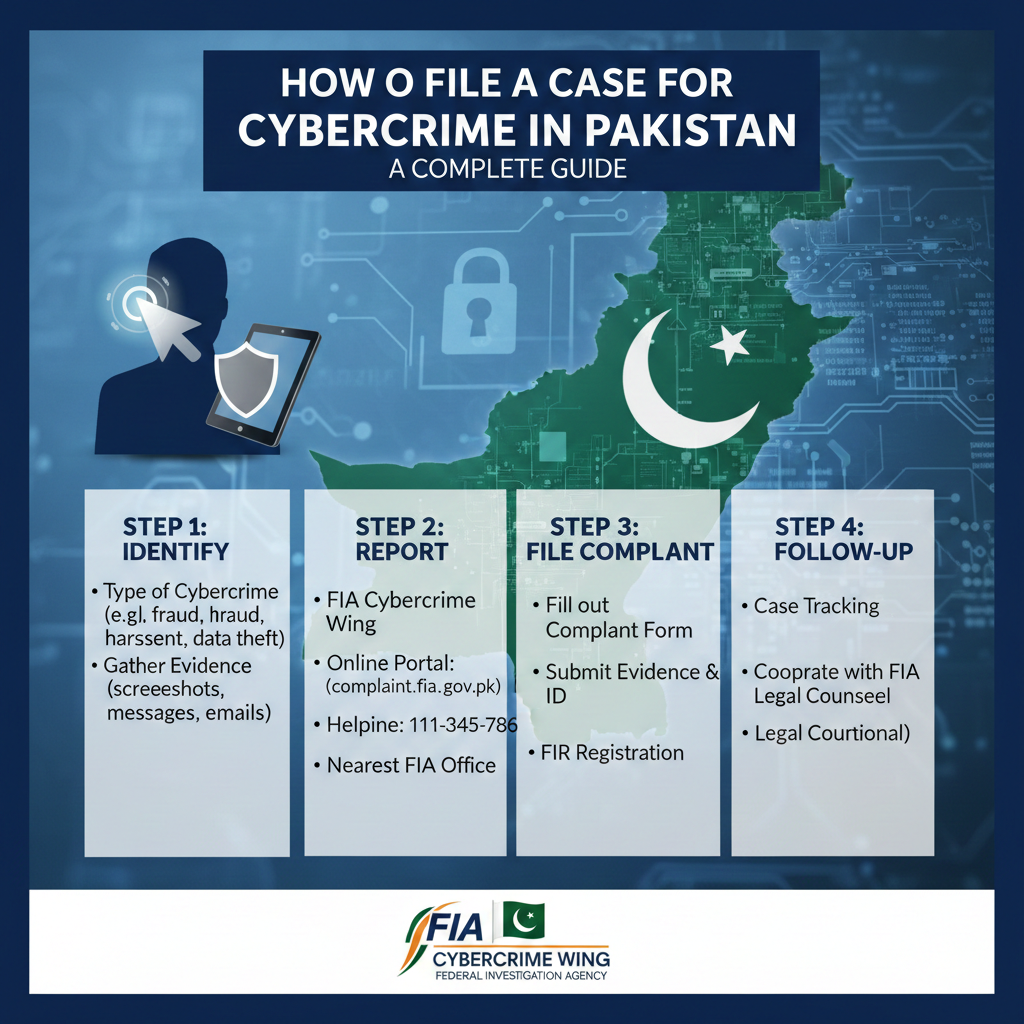
Step-by-Step Guide to Filing a Cybercrime Case in Pakistan
Step 1: Recognize the Type of Cybercrime
Before filing a case, it’s essential to recognize the type of cybercrime that has occurred. Some common forms of cybercrime in Pakistan include:
Online Fraud and Scams: Phishing emails, fake websites, or online payment fraud.
Identity Theft: Using personal information such as credit card numbers or social media accounts without authorization.
Harassment or Defamation: Cyberbullying, spreading false information, or making threats online.
Cyber Espionage: Unauthorized surveillance or hacking of private communications.
Once you have identified the crime, you can proceed with filing a complaint with the appropriate authorities.
Step 2: Gather Evidence
To file a successful cybercrime case, it’s essential to collect all relevant evidence. This may include:
Screenshots or recordings of the incident.
Email records, social media posts, or texts related to the crime.
Bank statements or transaction records if financial fraud is involved.
Device records showing signs of hacking or malware.
Preserving evidence is crucial, as it helps law enforcement in their investigation and strengthens your case.
Step 3: File a Complaint with the Federal Investigation Agency (FIA)
In Pakistan, cybercrimes are investigated by the FIA’s Cyber Crime Wing. You can file a complaint by following these steps:
Visit the FIA Cyber Crime Wing: You can visit the nearest FIA office or file an online complaint through the official FIA Cyber Crime Portal.
Provide a Detailed Complaint: Include all the necessary details about the crime, such as:
The type of cybercrime.
The accused person (if known).
The impact of the crime (financial, emotional, reputational).
Submit Evidence: Attach any evidence you have gathered, such as screenshots, email records, or transaction details.
The FIA will review your complaint and initiate an investigation if they find sufficient grounds to pursue the case.
Step 4: Investigation and Inquiry by the FIA
Once your complaint is filed, the FIA Cyber Crime Wing will:
Conduct an inquiry into the complaint.
Collect digital evidence from devices, networks, or servers.
Question the accused (if known) and gather witness statements.
In some cases, technical experts may be called to assist in tracing the origin of cybercrimes, such as tracking IP addresses, identifying hacking methods, or identifying fraudulent online accounts.
If the investigation reveals that a cybercrime has occurred, the FIA may move forward with legal action.
Step 5: Court Proceedings
If the FIA finds sufficient evidence, the case will be referred to the court for trial. During the trial:
Both parties will present their arguments and evidence.
Witnesses and expert testimony may be provided to strengthen the case.
The court will assess the evidence and make a ruling based on the severity of the crime and its impact on the victim.
The defendant may face criminal penalties, such as fines, imprisonment, or both, depending on the nature of the cybercrime.
Common Mistakes When Filing a Cybercrime Case
Step 1: Delaying the Complaint
One common mistake is delaying the filing of the complaint. Cybercrimes often involve fast-moving digital evidence, so the sooner you file a complaint, the better the chances of recovering lost data and catching the offenders.
Step 2: Failing to Collect Proper Evidence
Lack of proper evidence can weaken your case. Always collect as much evidence as possible, including device logs, email records, and screenshots of online harassment or fraud.
Step 3: Not Following Up with the Authorities
Cybercrime cases can be complex and may require regular follow-ups. Stay in contact with the FIA to ensure that your case progresses and that the authorities have all the necessary information.
Information Gain: Cybercrime Laws in Pakistan
Pakistan’s Prevention of Electronic Crimes Act (PECA) 2016 provides a legal framework for addressing cybercrimes, including hacking, online harassment, identity theft, and cyber fraud. The law empowers the FIA to investigate and prosecute cybercrimes, and includes harsh penalties for offenders. Some of the key provisions of PECA include:
Section 10: Defines and criminalizes cybercrime activities, including unauthorized access to data, identity theft, and defamation.
Section 16: Specifies penalties for online harassment, including up to 3 years of imprisonment and fines.
Section 24: Deals with the penalties for hacking, including imprisonment and fines for unauthorized access to computers or networks.
Myth vs. Reality: Is Cybercrime Only About Hacking?
Myth: Cybercrime is only related to hacking.
Reality: While hacking is one form of cybercrime, cybercrimes also include activities such as online fraud, identity theft, cyberbullying, online harassment, and defamation. These activities can have significant personal, social, and financial impacts on victims.
Real-World Scenario: How a Cybercrime Complaint Led to Justice
In Islamabad, a man filed a complaint with the FIA Cyber Crime Wing after being defrauded by an online scam. The accused had created a fake website and tricked the victim into transferring funds. With the help of digital forensics and tracking IP addresses, the FIA traced the scammer and arrested them. The court convicted the scammer, and the victim was able to recover a portion of the stolen funds. This case demonstrates the importance of filing complaints and pursuing justice for cybercrimes in Pakistan.
FAQ Section:
What types of cybercrimes can I report in Pakistan?
You can report crimes such as hacking, online fraud, identity theft, cyberbullying, and online harassment.
How do I file a cybercrime complaint in Pakistan?
You can file a complaint online through the FIA Cyber Crime Portal or visit the nearest FIA office to report the crime.
What is the penalty for cybercrime in Pakistan?
Penalties for cybercrime under PECA 2016 include imprisonment for up to 3 years and fines depending on the severity of the crime.
Can I file a cybercrime case against someone who harassed me online?
Yes, cyber harassment is a punishable offense under Pakistani law, and you can file a case with the FIA Cyber Crime Wing.
How long does it take for a cybercrime case to be resolved?
The time to resolve a cybercrime case can vary depending on the complexity of the case and the investigation. It may take several weeks to months.
Conclusion
Filing a cybercrime case is crucial for protecting yourself and holding offenders accountable for illegal online activities. By understanding the legal process, gathering evidence, and seeking the right legal assistance, you can ensure that justice is served. Pakistan’s cybercrime laws offer robust protection, and the FIA Cyber Crime Wing provides the necessary support to victims of online crime. If you’re a victim of cybercrime, don’t hesitate to file a complaint and pursue legal action.
